Wednesday, February 23, 2011

FRANKENSTEIN MEETS THE WOLF MAN (1943)

Two primary influences sparked my childhood interest in horror, which later grew into a roaring passion thanks to a complete lack of supervision during my teen years. It was on a bottom shelf at my grandmother’s house that I first discovered Denis Gifford’s “A Pictorial History of Horror Movies,” which provided a broad overview of the genre’s crème with a mostly black and white multitude of film stills that spanned decades up to that point. The book was packed with evocative photos from the silent era, to the days of Universal, then skipping onward to atomic mutant terrorists, and winding up with a chapter on the European revival of gothic horror.

I became familiar with the book prior to my own literacy, so film titles were impossible to extract. Still, the selected pictures engraved themselves deeply upon my young brain. Even years after losing the book, I would experience an elated recall whenever I’d recognize a familiar image from the book on film. The safest and most fond memories I have of childhood are best embodied by the thought of sitting under the large bay window in my grandmother’s house while lingering on some photos and nervously skipping past others that frightened me.

It was KTLA Channel 5 that served as both a counterpart to Gifford’s tome, and also as a major catalyst in getting me into horror. While I have previously mentioned KCOP Channel 13 out of Los Angeles as an incredibly influential station growing up, their weekend programming, late night and otherwise, gravitated toward more graphic European stuff, spaghetti Westerns, and drive-in fodder. Channel 13 that exposed me to “Billy Jack” and that the unsettling concept of rape and revenge, but Channel 5 introduced me to the Universal Monsters.

I can’t quite remember the year, but I know it was during an October that I was first permitted to stay up late to watch monster movies on television. As part of a week-long celebration leading up to Halloween, Tom Hatten, who MC’d early morning cartoons and the weekend Family Film Festival, hosted a prime time series that ran through the majority of the classic Universal horror films, spanning everything from “Frankenstein,” to “Dracula,” to “The Wolf Man,” to “The Invisible Man.” For my grandmother, who grew up during these initial releases, this was an occasion to celebrate. Each night we sat down to enjoy the blocks of black and white horror flicks, equally ecstatic. Now, some folks have comfort foods. I have comfort films, many of which I first saw back during that week.

Years later, Universal finally got around to repackaging and re-mastering a lot of these films under the Classic Collection mantle. For the first time, a lot of people were provided uncut looks at these films. Most dismiss 1931’s “Frankenstein” as too tame to qualify as a valid horror film by today’s standards, but when I was young the existing copies of this movie reflected edits that had been made to keep the film less offensive many years before. One major omission was the scene where the Monster tosses the little girl into the water, which ultimately leads to her death. Personally, I would have preferred the scene stay out, as it’s sped up and thus kind of comical. Another major cut comes when Henry Frankenstein shouts blasphemously after his creation comes to life.

Several decades later, I’ve crammed thousands of other films into my skull, but my fondness for the Universal horror films still beats powerfully. These films may be a passé topic for a lot of others who write about horror and cult film, but they paved the way toward a much darker stretch and I will always keep them in a prominent place both mentally and physically.

I’ll never quite be able to explain my attraction to sequels. In my mind, a sequel will totally validate a piece of shit. I have skipped numerous movies and then gone back after it yields a sequel that is probably equally crumby. Creatively, I think the process of writing a sequel appeals to me. The sequel is the gateway to mythology because it expands the initial story. I like seeing the aftermath of what occurred in the first film. All too often I will see a film and at its conclusion feel like life after the events I just watched would probably be a more interesting thing to see. But even if a sequel is bad, the attempt always intrigues me. In fact, nothing pisses me off more than an indirect sequel.

The only thing that grabs me more than an attempted sequel is a crossover, because it’s two fucking sequels in one. This is perhaps why Full Moon receives so much of my mercy, as they are probably the only studio since Universal to crossover more than two of their properties in a single feature. And while “Frankenstein Meets The Wolf Man” is nowhere near Universal’s finest horror film, it was the first Universal Monster crossover I got to see. Loving both Frankenstein’s Monster and the Wolf Man, the idea of them clashing truly epitomized a word that has been cheapened by a lot of douchebags these days: it was epic.

So, apparently all that business about silver being an effective means of killing off werewolves was bullshit, because once Larry Talbot’s grave is disturbed by a couple of low-life grave robbers his wolfier half pops out and fits them for new assholes. Why he transformed back to himself after being off’d with an ineffectual method of destruction at the end of the last film, I don’t know. Frankly, I’m more concerned with poor Bela, the guy who passed the affliction onto Larry in the first place, because if Larry’s just been sitting in his grave waiting to be dug up, then Bela’s probably been pretty bored, too. Larry languishes in a hospital for a while, ranting manically about his condition, and he eventually escapes, making way to Vasaria, otherwise known as Frankenstein country. Larry chances upon the monster and hopes to uncover the doctor’s notes, which he feels holds the key to his eternal rest. Using Frankenstein’s technology, he intends to drain his life energy away in a reverse of the process that created the monster. Shit goes awry during the operation, though, and the monsters clash. And then they fuck you out of a conclusion to the battle by blowing everything up. That always pissed me off as a kid and kind of still does. But still, I love this movie for what little bit of monster battle that we do get during the finale.

This particular movie also was one of the messier productions in Universal’s horror catalog. Karloff had stopped playing the role of the monster after “Son of Frankenstein” in 1939, and in 1942, when “Ghost of Frankenstein” rolled around, Karloff was busy on Broadway as part of the “Arsenic and Old Lace” cast. So, Lon Chaney Jr. was called up to play the roll of the monster. As it stood in 1943, Chaney had last played both the Wolf Man AND Frankenstein’s Monster. The studio initially had the idea of having Lon Junior play both roles by using a method of trick photography, but due to the high cost this idea was abandoned. Ironically, Bela Lugosi, whom had previously shunned the idea of playing such a one-dimensional role over a decade ago, was brought up to play the monster. At the conclusion of “Ghost of Frankenstein,” Lugosi’s Ygor character has his brain transplanted into the monster’s body, so this was a sound casting choice. The fact that it was obviously Lugosi under the makeup could easily be explained as Ygor showing through. If you watch the Monster’s scenes in “Frankenstein Meets The Wolf Man” very closely, you’ll actually see the Monster’s mouth moving. This was because the monster was written as an intelligent character, carrying over the brain transplant story from “Ghost of Frankenstein.” According to the film’s screenwriter, Curt Siodmak, when studio executives saw Lugosi talking in the monster makeup they lost their shit and were rolling in the aisles with laughter. I’ve seen some assholes try to dispute this fact, but not only can you clearly see Lugosi’s lips moving on screen, but the original Siodmak script was published in the 90s as part of the Universal Filmscript Series, and the monster’s dialog is indeed intact in the Photostats of the pages.

The following sequels, “House of Frankenstein” and “House of Dracula,” start to feel like cheap serials. This film’s subject was probably thought of as silly by producers, which would explain why the creativity put into the film is done so with very little respect for the material. The first two James Whale films were and are regarded very highly as fine pieces of cinema. This, however, is generally regarded as B-movie flotsam. It doesn’t necessarily feel as cheap as its successors. In fact, the quality of the production is pretty solid, but still, it’s a hot fucking mess.

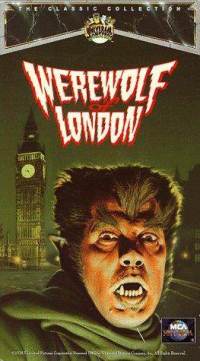
NEW STUFF: WEREWOLF OF LONDON (1935)

I’m sorry, but anybody who thinks that the makeup job in this movie is superior to the iconic look they gave Lon Junior in the 1941 “The Wolf Man” is delusional. I think the glowing regard for Hull’s werewolf might be a little Pavlovian. It’s very familiar. In fact, I always thought this particular design was uncannily similar to Eddie Munster’s appearance. Eddie's makeup, which is most likely an homage to Hull's werewolf, ultimately wound up retro-actively benefiting the original image's legacy thanks to the wild popularity of "The Munsters." As for the "London" makeup's "ingenious" design, that was more of a happy accident than anything. The makeup that eventually found its way onto Lon Chaney Junior’s mug six years later was originally thought up for “Werewolf of London,” but Henry Hull was a pussy and didn’t want to endure the arduous process of dawning the appliances. And so, they wound up dialing the makeup back to accommodate Hull.

This is one of very few Universal Studios horror films I’ve never seen. I remember buying all the Universal Monsters VHS reissues from the Universal Classic Collection when they came out during the 90s, and this was one that I never was able to find. Surprisingly, this was one of the few they never showed on TV when I was a kid.

Tuesday, February 22, 2011

PRIVATE SCHOOL... FOR GIRLS (1983)

If the unbearable cuteness of Phoebe Cates doesn’t distract you from the lack of plot, then Betsy Russell’s nude scenes make for a nice apology. Sure, the storyline is flimsy, mainly focusing on the events leading up Cates’ premeditated deflowering at the hands of Matthew Modine, but the humor and nudity are the real centerpiece.

Tons of shitty "Porky’s" imitations came out of the eighties, and a lot fail mainly due to forced and unlikable performances and jokes that just aren’t very funny. This is a total winner, though. It’s not only funny, but every actor is likable. Most notably, Michael Zorek, who was sadly underutilized during this trend in pop flicks, stands out as horn dog Bubba Beauregard. Modine turns in a decent comedic performance as Cates’ love interest. Russell is perhaps the most valuable player in this movie, with her character volleying between both vulnerable and sinister. I was most surprised by this performance since I’d only seen her in the abysmal “Avenging Angel,” where she replaces Donna Wilkes’ funny, snappy, and passionate take on the character with a foul and unwatchable stupidity that destroys the movie. While she is stunning to look at, in “Private School” she actually provides a performance that lives up to her good looks.

One fun fact is that this film actually features two actors who went on to appear in “Witchboard” together. Kathleen Willhoite appears here as Betsy, Cates’ wing girl, and would later go on to play wisecracking psychic Zarabeth in Kevin Tenney’s Ouija-centric classic three years later. Burke Byrnes, who plays Lieutenant Dewhurst in “Witchboard” appears as a character that I presume wound up on the cutting room floor. However, he is clearly visible in the background during “Private School”’s finale, and is credited as playing Phoebe’s father.

Monday, February 21, 2011

NEW STUFF: BEACH BABES FROM BEYOND (1993)

It's a rule of thumb that if a trailer has nudity that the movie automatically gets a pass, no matter how shitty it might be. I can't tell you how many times Academy Entertainment wrangled me into seeing some lousy piece of shit because the trailer had titties all over the place. Case in point, "Back Stab," starring James Brolin. However, "Beach Babes From Beyond" has far more than a nudity packed trailer. It was also directed by one of my personal heroes, David DeCoteau, and stars Linnea Quigley amongst a bevy of other amazing names. This one also features Burt Ward, whom in his 90s incarnation was pretty much a harbinger of breasts.

Thursday, February 17, 2011

PICASSO TRIGGER (1988)


With all due respect to the Sidaris estate, I had absolutely no faith that Andy would be able to either match or eclipse “Hard Ticket to Hawaii” with its sequel, “Picasso Trigger,” and I was right. But still, there are more than a few elaborately stupid action gags and bare breasts to sate the average Sidaris fan.
Playboy Playmates Dona Speir and the scrumptiously adorable Hope Marie Carlton (Remember the pinup girl in "Nightmare on Elm Street 4?") return as Dona and Taryn. In fact, most of the cast from "Hard Ticket" return to reprise their roles. Even Rodrigo Obregon, who played Seth Romero, from the previous film returns, albeit as a completely different character. However, the absence of one face is much to the surprising detriment of the entire film. Ron Moss, who previously played Rowdy Abilene is replaced by the far less charismatic Steve Bond. Gone are the huckster qualities that made Rowdy so endearing and fun. Sadly, Bond's rendition comes off as pretty dry and there’s virtually no camaraderie between he and Jade, once again played by Harold Diamond. What made Moss work in the previous film was that he brought a sense of self deprecating humor to the dashing Abilene that ultimately made him far more likable the first time around. 
In fact, tonally, the whole first half of “Picasso Trigger” has a strangely austere feel to it. It's bad, sure, but the fun just isn't there at first. The familiar elements are enough to carry you through a pretty barren stretch, and stuff does get thankfully dumber by the second half. In fact, fans of TV Carnage will immediately recognize most of the finale footage from the “Casual Fridays” edition.
Don’t even bother trying to extract a plot from this mess. It exists, but it’s poorly woven together, and it’s really not worth trying to figure out. Besides, that’s not why we watch Andy’s movies anyway. I did the math and there’s actually one explosion an average of every ten minutes. The boobs come even more frequently. Strangely, the nudity is gratuitous, but it’s not as lingering or joyfully displayed as in the previous film. Nevertheless, there are boobs and explosions abound.
My favorite character in the movie has to be the Professor (aka Dickson), once again played by Richard LaPore. Here, LaPore eases into the Sidaris Universe’s equivalent role of Q from the Bond films, only way fucking dumber. The Professor eventually bestows upon the good guy agents a bevy of ridiculous weapons that don’t even qualify as gadgets. Basically, they’re just ordinary items that you can Velcro explosives onto. For instance, at one point, he presents Donna with a boomerang that you can attach C4 to. By the way, who the fuck would want a BOOMERANG with a bomb on it? Completely stupid, yes. In fact, so stupid it's genius. 
Overall it’s a worthy entry in the series, mainly because the big action beats live up to the bar Andy set with “Hard Ticket.”

SORORITY BABES IN THE SLIME BOWL-O-RAMA (1988)

I hadn't seen this since the ragged days of my brain-damaging teenage insomnia. Somehow, I never managed to pick this up as a rental, but that's probably a good thing. At 16, I had already developed a rabid lust for Brinke Stevens, and I would have burst a vital blood vessel over her shower scene.

An absolutely stellar credit in director David DeCoteau's catalog, "Sorority Babes in the Slime Bowl-O-Rama" starts off with two horny frat dudes cajoling a nerdy third into joining them for a peep show at the “Felta” Delta house. Upon arrival the boys are treated to a panty-shot paddling, administered by kinky head sister Babs. After the boys are caught spying, the Deltas force them to accompany the pledges during the next phase of initiation: the after hours theft of a trophy from the mall bowling alley. After breaking and entering, the kids run into punk burglar Spider. They procure the trophy, but a fumble busts the thing open and an imp appears to grant each of them a wish. It isn’t before long that their desires completely spoil, and the imp turns out to be a sinister force out for blood.

The average dummy might dismiss this film as simply being cheap and terrible, but DeCoteau demonstrates a powerful film making prowess by materializing a surprisingly strong b-film with an astonishingly low 90k budget. There’s something to be said for firmly holding the reigns of a multi-million production. After all, the larger the scale, the more corners there are for chaos to breed in. Still, I doubt most studio directors could make a film like this happen with such meager means. DeCoteau has made a routine of squeezing gallons of blood from a single pebble. The man is a superior artistic force.

The movie is also well-acted, given the material. Once again, just as a competent director can get a lot of mileage out of ten million dollars, a capable performer with top notch material usually wins out and probably walks away with more credit than they deserve. A great performer can take sub-par material and make it work. The charismatic Andras Jones, as chief frat nerd Calvin, turns in yet another likable performance. Most will probably recognize him as Rick, Alison’s brother from the poisonous “A Nightmare on Elm Street 4: The Dream Master.” Regardless of the material, Andras rises like cream in nearly every film he’s in. It’s a shame more frequent use of the guy was never made. Despite remaining fully clothed, Linnea Quigley shines as the deliciously bratty Spider. This is a red letter performance from Quigley, who's often cast off as mere scream queen. She's given more to do here than usual though, and it's very apparent that she isn't just a b-caliber actress, but actually has a fascinating and bizarre style. Michael Sonye, who plays the delightful Mengele in "Surf Nazis Must Die," surprises as the man responsible for the Imp's ghetto Big Bopper voice.

The copy I own was recently rescued from Salzer’s Video in Ventura, California, where it had once proudly occupied the Cult section. At some point in the last decade or so, Salzer’s management created another section which they preposterously dubbed, “Offensive.” It was there that “Sorority Babes” had languished until I had it snatched. I’m not exactly sure why this film was deemed offensive, but I blame the neo-puritans and their regressively moralistic views. There’s nothing offensive about this film unless nudity makes you uncomfortable. Personally, when I think offensive, the extremity of “Salo; or the 120 Days of Sodom” aggressively hedges out the bullshit paddling scene from “Sorority Babes.”

Wednesday, February 16, 2011

FALLEN ANGEL (1981)

Made for television at the onset of the American public's stranger-danger panic, "Fallen Angel" has matured into a darkly-hued hilarious camp piece over the span of its 30 year life. Mixing elements of "The Bad News Bears" with Paul Schrader's "Hardcore," the movie is exceptionally creepy despite being tame enough to meet the restrictions of its format. Dana Hill, best recognized for assuming the role of Audrey Griswold in "National Lampoon's European Vacation," plays Jennifer Philips, a young girl on the thresh hold of burgeoning womanhood who has recently lost her father. Meanwhile, kiddie porn talent scout Howard Nichols (Richard Masur) is under the gun to replace one of their stars who's falling apart at the seams. Still grieving, Jennifer is reluctant to accept the new man in her mother's life, and soon rising tensions at home are pushing her out into the street and into the assuring arms of good old Howie, who is also the coach of an all girl's softball team. At first Howard merely panders to her insecurities through flattery, but he soon works up to Orange Crush & Quaalude cocktail fueled woodland fuckfests with other teens in no time. Eventually, the cat gets out of the bag, Jennifer runs away out of shame, but is quickly tracked down by her mother, who confronts Howard for all the evil he has done.

The cast is rock solid, also featuring Ronny Cox as the pending step dad, while mom is played by Melinda Dillon ("Close Encounters of the Third Kind," and "A Christmas Story"). Dana Hill is impressive through every bit of the film, demonstrating a remarkable battery of facial expressions you rarely see in a performer her age. Unfortunately, puberty stomped out any evidence of her adorableness by '85. Richard Masur's performance as the manipulative coach Howie Nichols is undoubtedly the best thing about the movie. Howie is both sweet and seedy, but manages to avoid an over the top performance despite the fact that his lines are a rich lunch of double entendres. At one point, when meeting Jennifer's parents after a losing soft ball game, he puts his arm around her, and says, "don't worry, we'll work on her grip next week."

This Columbia Pictures Home Video release can be a little on the pricier side, but for fans of camp and the unintentionally hilarious, this is a worthy addition to your collection that will have no problem getting over at parties.

"Poor Michelle will never be the same."