Saturday, March 26, 2011

SCREAM FOR HELP (1984)

The moment this tape arrived I embarked on a bi-polar coaster ride for over a week before actually inserting it into my VCR. I was initially apprehensive because “Scream For Help” was an unlikely marriage of talents. Not that writer Tom Holland and director Michael Winner are diametrically opposed in terms of what they do. Both are responsible for some of my favorite films of all time. In fact, I’d categorize this pairing as a ferocious dream team. Unfortunately, in my experience, collaborations between two strong and talented personalities usually results in a big, fat let down.

Holland wrote some of my favorite films of all time, including “Class of 1984,” “Cloak & Dagger,” and “The Beast Within.” He also wrote and directed the phenomenal “Fright Night,” as well as “Child’s Play.” The man also has cajones forged from the magma of a netherworld volcano for tackling the intimidating task of penning “Psycho II.” As a screenwriter, I’ve often ponder what it must have been like to have been handed the job of writing a legitimate sequel to what is considered by most to be one of the greatest movies of all time. Going into that project, you had to know there was no way you were going to win. Even if you wrote something that managed to supersede the original, no one would ever admit it out of reverence for the original. People were going to be predisposed to bashing it. Ultimately, Holland wound up creating a respectable sequel. On the other hand, Michael Winner directed, what is in my opinion, one of the greatest movies ever made, “Death Wish 3.” As I mentioned before, sometimes you combine two ultimate badasses and they crack horns ‘til their both drunk, or cancel each other out, and the results are tepid. That's sort of what I was expecting here, because this pairing is like the cinematic equivalent of mana.

You can call “Scream For Help” a success, but it doesn’t come near the sort of artistic achievement most typical people demand before calling a film “great." The dialog here broadsides out of left, frequently veering into unintentionally hilarious territory. The acting has the sort of speech fluidity you only hear on a “Learn To Speak English” tape. The score by Led Zeppelin’s John Paul Jones comes in tacky, jarring slabs. In fact most will notice that some of the later music cues wound up being used in Jimmy Page’s “Death Wish 3” score. The story itself feels like a compacted season of a soap opera, amplifying its outrageousness. All of these things combine to form a truly entertaining and engaging film. You'd have to have a petrified branch up your ass to not have fun while watching this.

Predating “The Stepfather” by several years, the story begins with a narrative by young Christie Cromwell who is convinced that her mother’s new husband, Paul Fox, is out to get them both. The opening moments of the film harkens to the spirit of innocent William Castle brand fun, ala “Thirteen Frightened Girls!,” but they eventually dump a wild bouquet of vulgarity, blood, tits, and sleazy sex into the mix that occasionally catches you off guard.

The accidental death of a maintenance man arouses Christie’s suspicion in her stepfather. She believes the fatal scenario was intended to claim the life of her mother. Christie decides to shadow Paul and soon uncovers an extramarital affair. Her friends eventually become entangled in her quest for proof, with lethal results. Here’s one of my favorite scenes from the film.

Fucking awesome!

Eventually, Christie convinces her mother of Paul’s infidelity with a little photographic proof. Soon after, Paul and his gang of homicidal conspirators invade the Cromwell mansion with a plot to kill mother and daughter and make it look like a burglary gone bad. The film has an ironic twist, as Christie defends her mother and bumps off the goons using a batch of methods derived from Paul’s earlier failed murder attempts.

Mince chunks of "Square Pegs," "Dallas," early "Dark Shadows," and cut the intensity of “Fight For Your Life” with the suave noir of “The Desperate Hours” all together and you wind up with "Scream For Help." In spite of its loud, over the top qualities, the movie remains relatively obscure. Some feel that the tape's blase packaging effectively camouflages and discouraged most people from picking it up. Don’t let this ordinary looking box detour you, though. Inside this pale looking clamshell exists a wild piece of microwaved trash that stands up to repeated viewings. A super-fun must-own tape for any collector. As a collaborative effort between two heavyweights, it definitely lives up to whatever expectation you might build up in your mind before hand, which makes this movie all the more exceptional.

Thursday, March 24, 2011

STREETWALKIN' (1985)

There’s probably more exposition on the back of the box than there is in the actual movie, and that is perhaps "Streetwalkin'’s biggest problem. Similar films from this period usually feature likable characters who get over on their moxie, whereas this flick's protagonist barely gets by on nudity. In fact, "Streetwalkin'"s Cookie verges on unlikable at times, due mainly to the fact that she is creatively flat. She is naive and vulnerable, and seems pretty happy-go-lucky sucking strange dick for cash. I also kind of get the impression that if her pimp weren't occasionally abusive, life would be pretty perfect for her. There is no hint of displeasure when it comes to what she's become. Still, every streetwalker should have an edge, and Cookie comes comes across as dumb and grinning for the most part. It is her complete and utter lack of tenacity or toughness that makes it virtually impossible to feel anything for her.

The story begins as Cookie and younger brother Tim arrive at New York's Port Authority, which was like an in-door post apocalyptic wasteland at the time this film was shot, and in fact I'm surprised no one did some 42 Street sleaze that used it as a primary setting. Cookie immediately calls home and vague conversation informs us that her alcoholic mom blames her daughter for the sexual advances of her stepfather. Charming predator Duke is fast to pick up the pieces, winning the distraught girl’s trust. An undetermined amount of time flashes by, and by that point Cookie has settled into a life of prostitution, turning tricks out of Duke’s apartment. In fact, she even has a crush on him. According to her demeanor, life seems pretty carefree. Except for the fact that Duke will occasionally slap the shit out of a bitch.

In “Vice Squad,” which is the undeniable mothership of movies on this particular topic, and an obvious influence on this film, the main character, Princess, is clearly caught up in a moral struggle regarding her career. She does what she must to support her daughter, and the scenes where she sells her body for money are either funny or creepy, but never sexy. Even the title character in the classic “Angel” has been driven to a life of prostitution following the death of her mother, but she is certainly ashamed of her path. Both of these characters embody an admirable toughness though that makes them feel like underdogs worth cheering for. Cookie on the other hand is very weak. In fact, the villain is, unintentionally, the only sympathetic character in this movie.

Similar to “Vice Squad” in basic plot, the bulk of the story has to do with a tough pimp out for vengeance against the prostitute who wronged him. After her friend and fellow working girl is brutally beaten by Duke, Cookie jumps ship, joining rival hustler Jason's stable of bitches. To protect Cookie, Jason orders Duke’s execution. Duke fights his way out of the hit, though, and he’s soon back on the streets looking for the traitorous Cookie.

Dale Midkiff, whom most will recognize as Louis Creed from “Pet Semetary,” delivers a performance packed with pathos as Duke. He may be a woman abusing scum bag, but there are key scenes that really make you connect with his sense of betrayal. In particular, the scene where he returns home after escaping Jason’s hit to find Cookie gone is extraordinarily well done.

In all, “Streetwalkin’” is at the very least a watchable-to-fun offering. Supporting performances by Julie Newmar, Antonio "Huggy Bear" Fargas, and Khandi Alexander are entertaining. Ultimately, though, it’s incredibly derivative of other films from its respective subgenre, and the key characters that should carry the story are one dimensional and therefore seemingly absent.

Six years later, director Joan Freeman’s screenplay was reworked into another film entitled “Uncaged." It's virtually the same bullshit story, only it takes place this time in Los Angeles and stars Leslie Bega, who is way hotter than Melissa Leo.

Friday, March 4, 2011

SAVAGE BEACH (1990)

The previous entry in Sidaris’ Lethal Ladies series, “Picasso Trigger,” paddles wildly to catch up with the insanity of “Hard Ticket to Hawaii,” and it comes watchably close to that goal. But “Savage Beach” on the other hand never even tries to breach the business of its predecessors, and that may very well be why it succeeds. It’s nowhere near as chunky in terms of its story. In fact, this one actually feels like a real movie even at the onset. Maybe Andy was just getting better at working with what he was given, but the production values seem a little higher here, too. Overall, there’s enough to sate fans of the series that had by this point grown to expect a quota of bare breasts and strange action. What’s important is in tact. Otherwise, this may well be the “For Your Eyes Only” of this particular franchise in that it strays toward simplicity in terms of its story.

The basic plot revolves around the search for a shipment of plundered Filipino gold lost at sea during World War II. Rodrigo Obregón returns as a brand new heavy, Martinez, a South American revolutionary who’s working with the American government to retrieve the loot. However, Martinez intends to steal the gold once it’s been located so he can funnel it into his own radical interests. Meanwhile, Dona and Taryn, while on an errand of mercy for Molokai, are caught in the eye of a storm which forces them to crash land on an uncharted island. Soon, the girls learn they aren’t quite alone and find themselves faced with a dangerous castaway. Coincidentally, the operation to retrieve the lost gold brings more deadly company to the island.

The rotation of characters, too, is pared down. Another Abilene is briefly introduced, but plays a far less integral character here. Lisa London is brought in as Rocky, assuming the function of the Edy character, assisted by the returning Patty Duffek as Pattycakes. Familiar Tong faces from “Big Trouble In Little China” are also featured here. Most will instantly peg the legendary Al Leong as one of the badass red turbans from the Carpenter flick. James Lew, who even got a few words in with Kurt Russell as one of the Chang Sings, is here, too. Sadly, “Savage Beach” is the last film to feature Hope Marie Carlton’s Taryn character.

Overall, the unique storyline makes for one of the more worthwhile entries in the series. In spite of its odd clarity, this still feels like a Sidaris movie, albeit strangley more refined.

By the way, someone recently pointed out that I never acknowledge "Malibu Express" as part this series, and I feel the need to explain myself at the risk of taking this shit way too seriously. In "Hard Ticket," Taryn has a "Malibu Express" movie poster on her wall, which I think would disqualify the events of that film as part of Dona and Taryn's reality. I know they acknowledge that an Abilene became an Actor in "Hard Ticket," but that doesn't make the events of "Malibu Express" a reality in this universe. I can't believe I'm arguing logic pertaining to these movies, but there ya go.

Wednesday, February 23, 2011

FRANKENSTEIN MEETS THE WOLF MAN (1943)

Two primary influences sparked my childhood interest in horror, which later grew into a roaring passion thanks to a complete lack of supervision during my teen years. It was on a bottom shelf at my grandmother’s house that I first discovered Denis Gifford’s “A Pictorial History of Horror Movies,” which provided a broad overview of the genre’s crème with a mostly black and white multitude of film stills that spanned decades up to that point. The book was packed with evocative photos from the silent era, to the days of Universal, then skipping onward to atomic mutant terrorists, and winding up with a chapter on the European revival of gothic horror.

I became familiar with the book prior to my own literacy, so film titles were impossible to extract. Still, the selected pictures engraved themselves deeply upon my young brain. Even years after losing the book, I would experience an elated recall whenever I’d recognize a familiar image from the book on film. The safest and most fond memories I have of childhood are best embodied by the thought of sitting under the large bay window in my grandmother’s house while lingering on some photos and nervously skipping past others that frightened me.

It was KTLA Channel 5 that served as both a counterpart to Gifford’s tome, and also as a major catalyst in getting me into horror. While I have previously mentioned KCOP Channel 13 out of Los Angeles as an incredibly influential station growing up, their weekend programming, late night and otherwise, gravitated toward more graphic European stuff, spaghetti Westerns, and drive-in fodder. Channel 13 that exposed me to “Billy Jack” and that the unsettling concept of rape and revenge, but Channel 5 introduced me to the Universal Monsters.

I can’t quite remember the year, but I know it was during an October that I was first permitted to stay up late to watch monster movies on television. As part of a week-long celebration leading up to Halloween, Tom Hatten, who MC’d early morning cartoons and the weekend Family Film Festival, hosted a prime time series that ran through the majority of the classic Universal horror films, spanning everything from “Frankenstein,” to “Dracula,” to “The Wolf Man,” to “The Invisible Man.” For my grandmother, who grew up during these initial releases, this was an occasion to celebrate. Each night we sat down to enjoy the blocks of black and white horror flicks, equally ecstatic. Now, some folks have comfort foods. I have comfort films, many of which I first saw back during that week.

Years later, Universal finally got around to repackaging and re-mastering a lot of these films under the Classic Collection mantle. For the first time, a lot of people were provided uncut looks at these films. Most dismiss 1931’s “Frankenstein” as too tame to qualify as a valid horror film by today’s standards, but when I was young the existing copies of this movie reflected edits that had been made to keep the film less offensive many years before. One major omission was the scene where the Monster tosses the little girl into the water, which ultimately leads to her death. Personally, I would have preferred the scene stay out, as it’s sped up and thus kind of comical. Another major cut comes when Henry Frankenstein shouts blasphemously after his creation comes to life.

Several decades later, I’ve crammed thousands of other films into my skull, but my fondness for the Universal horror films still beats powerfully. These films may be a passé topic for a lot of others who write about horror and cult film, but they paved the way toward a much darker stretch and I will always keep them in a prominent place both mentally and physically.

I’ll never quite be able to explain my attraction to sequels. In my mind, a sequel will totally validate a piece of shit. I have skipped numerous movies and then gone back after it yields a sequel that is probably equally crumby. Creatively, I think the process of writing a sequel appeals to me. The sequel is the gateway to mythology because it expands the initial story. I like seeing the aftermath of what occurred in the first film. All too often I will see a film and at its conclusion feel like life after the events I just watched would probably be a more interesting thing to see. But even if a sequel is bad, the attempt always intrigues me. In fact, nothing pisses me off more than an indirect sequel.

The only thing that grabs me more than an attempted sequel is a crossover, because it’s two fucking sequels in one. This is perhaps why Full Moon receives so much of my mercy, as they are probably the only studio since Universal to crossover more than two of their properties in a single feature. And while “Frankenstein Meets The Wolf Man” is nowhere near Universal’s finest horror film, it was the first Universal Monster crossover I got to see. Loving both Frankenstein’s Monster and the Wolf Man, the idea of them clashing truly epitomized a word that has been cheapened by a lot of douchebags these days: it was epic.

So, apparently all that business about silver being an effective means of killing off werewolves was bullshit, because once Larry Talbot’s grave is disturbed by a couple of low-life grave robbers his wolfier half pops out and fits them for new assholes. Why he transformed back to himself after being off’d with an ineffectual method of destruction at the end of the last film, I don’t know. Frankly, I’m more concerned with poor Bela, the guy who passed the affliction onto Larry in the first place, because if Larry’s just been sitting in his grave waiting to be dug up, then Bela’s probably been pretty bored, too. Larry languishes in a hospital for a while, ranting manically about his condition, and he eventually escapes, making way to Vasaria, otherwise known as Frankenstein country. Larry chances upon the monster and hopes to uncover the doctor’s notes, which he feels holds the key to his eternal rest. Using Frankenstein’s technology, he intends to drain his life energy away in a reverse of the process that created the monster. Shit goes awry during the operation, though, and the monsters clash. And then they fuck you out of a conclusion to the battle by blowing everything up. That always pissed me off as a kid and kind of still does. But still, I love this movie for what little bit of monster battle that we do get during the finale.

This particular movie also was one of the messier productions in Universal’s horror catalog. Karloff had stopped playing the role of the monster after “Son of Frankenstein” in 1939, and in 1942, when “Ghost of Frankenstein” rolled around, Karloff was busy on Broadway as part of the “Arsenic and Old Lace” cast. So, Lon Chaney Jr. was called up to play the roll of the monster. As it stood in 1943, Chaney had last played both the Wolf Man AND Frankenstein’s Monster. The studio initially had the idea of having Lon Junior play both roles by using a method of trick photography, but due to the high cost this idea was abandoned. Ironically, Bela Lugosi, whom had previously shunned the idea of playing such a one-dimensional role over a decade ago, was brought up to play the monster. At the conclusion of “Ghost of Frankenstein,” Lugosi’s Ygor character has his brain transplanted into the monster’s body, so this was a sound casting choice. The fact that it was obviously Lugosi under the makeup could easily be explained as Ygor showing through. If you watch the Monster’s scenes in “Frankenstein Meets The Wolf Man” very closely, you’ll actually see the Monster’s mouth moving. This was because the monster was written as an intelligent character, carrying over the brain transplant story from “Ghost of Frankenstein.” According to the film’s screenwriter, Curt Siodmak, when studio executives saw Lugosi talking in the monster makeup they lost their shit and were rolling in the aisles with laughter. I’ve seen some assholes try to dispute this fact, but not only can you clearly see Lugosi’s lips moving on screen, but the original Siodmak script was published in the 90s as part of the Universal Filmscript Series, and the monster’s dialog is indeed intact in the Photostats of the pages.

The following sequels, “House of Frankenstein” and “House of Dracula,” start to feel like cheap serials. This film’s subject was probably thought of as silly by producers, which would explain why the creativity put into the film is done so with very little respect for the material. The first two James Whale films were and are regarded very highly as fine pieces of cinema. This, however, is generally regarded as B-movie flotsam. It doesn’t necessarily feel as cheap as its successors. In fact, the quality of the production is pretty solid, but still, it’s a hot fucking mess.

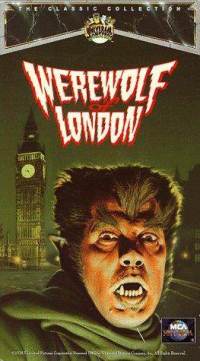
NEW STUFF: WEREWOLF OF LONDON (1935)

I’m sorry, but anybody who thinks that the makeup job in this movie is superior to the iconic look they gave Lon Junior in the 1941 “The Wolf Man” is delusional. I think the glowing regard for Hull’s werewolf might be a little Pavlovian. It’s very familiar. In fact, I always thought this particular design was uncannily similar to Eddie Munster’s appearance. Eddie's makeup, which is most likely an homage to Hull's werewolf, ultimately wound up retro-actively benefiting the original image's legacy thanks to the wild popularity of "The Munsters." As for the "London" makeup's "ingenious" design, that was more of a happy accident than anything. The makeup that eventually found its way onto Lon Chaney Junior’s mug six years later was originally thought up for “Werewolf of London,” but Henry Hull was a pussy and didn’t want to endure the arduous process of dawning the appliances. And so, they wound up dialing the makeup back to accommodate Hull.

This is one of very few Universal Studios horror films I’ve never seen. I remember buying all the Universal Monsters VHS reissues from the Universal Classic Collection when they came out during the 90s, and this was one that I never was able to find. Surprisingly, this was one of the few they never showed on TV when I was a kid.

Tuesday, February 22, 2011

PRIVATE SCHOOL... FOR GIRLS (1983)

If the unbearable cuteness of Phoebe Cates doesn’t distract you from the lack of plot, then Betsy Russell’s nude scenes make for a nice apology. Sure, the storyline is flimsy, mainly focusing on the events leading up Cates’ premeditated deflowering at the hands of Matthew Modine, but the humor and nudity are the real centerpiece.

Tons of shitty "Porky’s" imitations came out of the eighties, and a lot fail mainly due to forced and unlikable performances and jokes that just aren’t very funny. This is a total winner, though. It’s not only funny, but every actor is likable. Most notably, Michael Zorek, who was sadly underutilized during this trend in pop flicks, stands out as horn dog Bubba Beauregard. Modine turns in a decent comedic performance as Cates’ love interest. Russell is perhaps the most valuable player in this movie, with her character volleying between both vulnerable and sinister. I was most surprised by this performance since I’d only seen her in the abysmal “Avenging Angel,” where she replaces Donna Wilkes’ funny, snappy, and passionate take on the character with a foul and unwatchable stupidity that destroys the movie. While she is stunning to look at, in “Private School” she actually provides a performance that lives up to her good looks.

One fun fact is that this film actually features two actors who went on to appear in “Witchboard” together. Kathleen Willhoite appears here as Betsy, Cates’ wing girl, and would later go on to play wisecracking psychic Zarabeth in Kevin Tenney’s Ouija-centric classic three years later. Burke Byrnes, who plays Lieutenant Dewhurst in “Witchboard” appears as a character that I presume wound up on the cutting room floor. However, he is clearly visible in the background during “Private School”’s finale, and is credited as playing Phoebe’s father.

Monday, February 21, 2011

NEW STUFF: BEACH BABES FROM BEYOND (1993)

It's a rule of thumb that if a trailer has nudity that the movie automatically gets a pass, no matter how shitty it might be. I can't tell you how many times Academy Entertainment wrangled me into seeing some lousy piece of shit because the trailer had titties all over the place. Case in point, "Back Stab," starring James Brolin. However, "Beach Babes From Beyond" has far more than a nudity packed trailer. It was also directed by one of my personal heroes, David DeCoteau, and stars Linnea Quigley amongst a bevy of other amazing names. This one also features Burt Ward, whom in his 90s incarnation was pretty much a harbinger of breasts.